

WE MAKE QUALITY VISIBLE
A Holdco that values quality
JMGC partners with profitable, closely held companies that are better than their market realizes. We invest, and our team goes to work on the three things that decide what a business is worth: demand, how it’s positioned, and why customers stay.
Growth that reaches past your network, aimed at larger, better clients.
What you sell, how it's packaged, and what it should cost — rethought.
A customer journey rebuilt as a commercial system, so customers stay.
Quality is an
Experience

Portfolio
JMGC holds interests in operating companies across strategy, technology, and services.

A global strategy and experience consultancy headquartered in New York, serving enterprises including Thermo Fisher Scientific, Starbucks, Carnival Corporation, Levi’s, and Saks Fifth Avenue.
g-co.agency→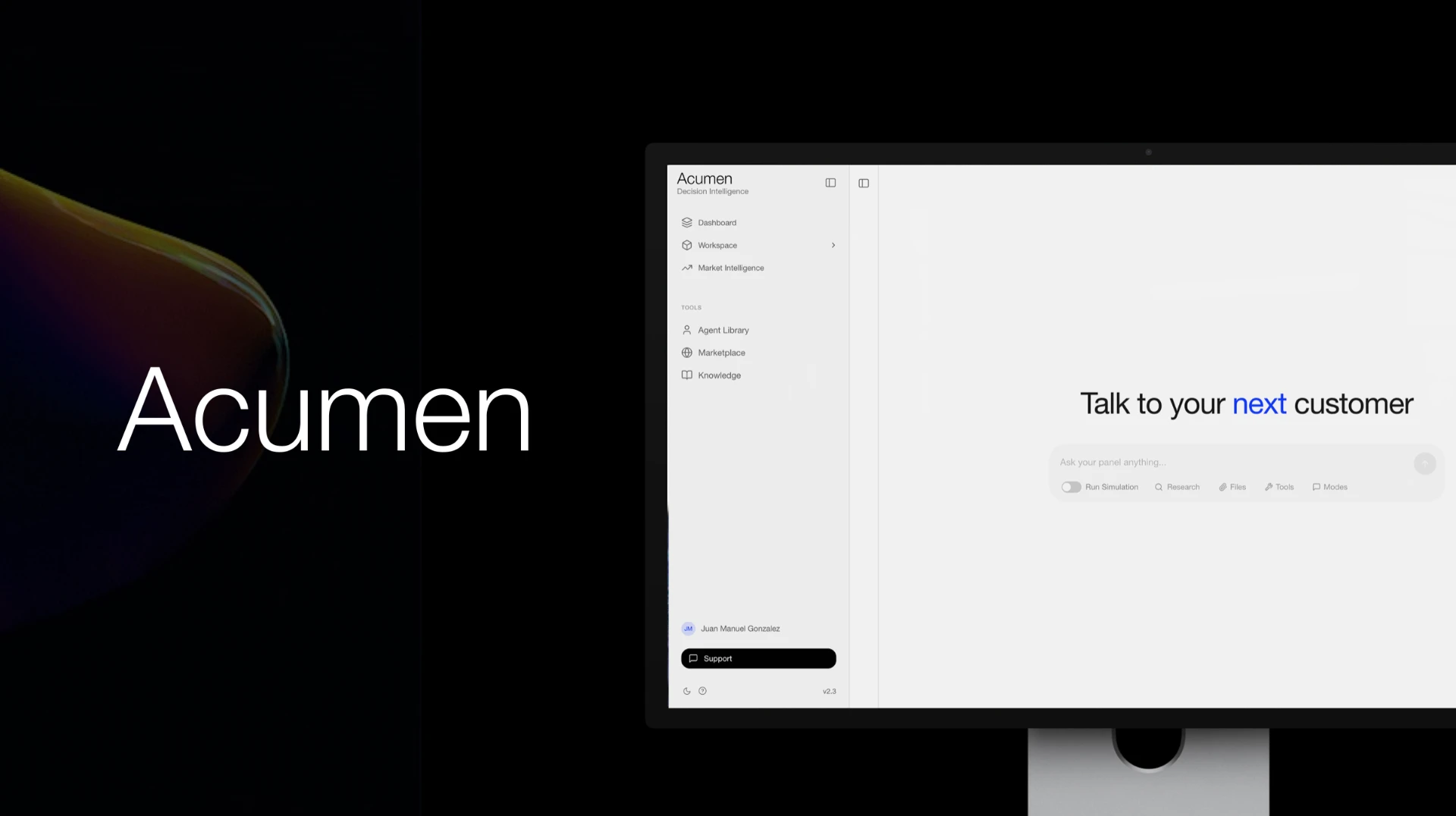
Acumen simulates how buyers actually reach a decision, not how they say they do. Enterprise teams use it to pressure-test a strategy before they commit to it.
acumen-data.com→


Built the way we’d build with you
An operator’sholding company.
JMGC is run by people who have built and operated businesses, not only invested in them. The firm’s experience comes from years of positioning, demand generation, and customer experience work for some of the largest enterprises in the world — and from building companies of its own. That experience is what comes with a partnership. Where it’s useful, the companies we invest in also have access to specialist teams we’ve built over the years; it’s an advantage available to them, never a condition of working with us.
Everything under JMGC was bootstrapped. Millions in revenue, from nothing, funded entirely by profit we earned and chose to put back to work. No venture capital. No loans. Every dollar of growth had to justify itself, and the discipline that came from that is exactly what we bring to a partnership — capital deployed patiently, where it compounds.
Quality is an experience, not a claim. And retention is the new acquisition: the companies that win are the ones customers don’t leave.
New York, New York
Operating globally
Operator-led
Three things we change.Nothing else.
No two businesses arrive with the same problem. Some grow steadily but lose customers as fast as they win them. Some keep everyone they win and can’t win enough. Some are simply unknown to the people who would pay them the most.
Underneath all of it sit the same three things, and those are what we work on.
Who Comes to You
Growth usually stops at the edge of your network. We build demand generation that reaches past it and aims it at the customers worth the most to you — your premium tier, your best-paying accounts, the larger clients you've never had a route to. We've done this work before, for some of the largest enterprises in the world, from Starbucks to Thermo Fisher Scientific.
What You're Worth
What got you here is usually still your best asset. The question is whether it has been developed since — what's in the offer, how it's packaged, who it's built for, and what it should cost. We look at that, and at where new technology, including AI and agent-based systems, can make what you sell faster to deliver, cheaper to run, or better to buy. Done right, each customer is worth more without you needing to find more of them.
Why They Stay
Retention compounds. Acquisition, itself doesn't. We rebuild the customer journey as a commercial system rather than a service nicety — and where it earns its place, we use AI and agent-based tools to make that experience faster and more responsive than would otherwise be possible. It's informed by what the best customer experiences in the world actually look like, because we've built them.
We invest in a small number of companies and work deeply inside each one, so fit matters more than volume.
- Established and profitable
- We partner with businesses that already work.
- Owned by people who care about it
- Founders, families, or a close-held team that intends to stay.
- Customers who come back
- In whatever form that takes in your business.
- A market of interchangeable competitors
- You must be a meaningfully different choice.
- Priced below what your work is worth
- This is the one we care about most.
Specialty business services. Healthcare and life sciences. Vertical software and data. Premium consumer services. Consumables sold through professional channels.
If you’re outside these and you think we’re a fit, write to us anyway.
Executed in-house,in a defined order.
The three changes above, plus the infrastructure that makes them hold. All of it done by our own people, inside your business. It’s work, not advice — and it never comes with an invoice.
- 01
Position
We define what category you actually compete in, what makes you the better choice inside it, and what you should charge. Months 1–3.
- 02
Demand
We rebuild how buyers find you: the systems that turn attention into a conversation with your team. Months 2–6.
- 03
Experience
We reconstruct the customer journey end to end, so the second purchase is more likely than the first. Months 2–12.
- 04
Infrastructure
We install the technology and operating discipline that keeps all of it running after we've stepped back. Ongoing.
A short process,done properly.
You don’t need a banker or a data room to start — just a conversation. From there we run a defined process rather than an open-ended one. We do most of the work on our side: your market, your customers, and where we think the opportunity sits. What we ask of you is limited and specific — your financials, a look at how the business runs day to day, and a few conversations with people who know it well. Where it matters, we bring in outside accountants and counsel to confirm what we’ve seen, so neither of us is working on instinct.
You’ll know where you stand quickly, and you’ll hear the reasoning either way.
What changes,and what doesn’t.
Our partnerships are built around the owner staying in charge. What changes is that our team begins working on your growth.
Continuity is the starting point.
In most partnerships the owner keeps running the company and the team stays as it is. Where something does need to change, it’s worked out together.
We take on the growth work.
Marketing, positioning, and customer experience sit with us, to whatever extent you want them to. Your team stays focused on what it already does well.
How you get paid.
Partnerships typically include cash to the owner at the outset, with continued ownership afterward; terms are set company by company. We invest for the long term, which means we favor work that pays back over years rather than decisions made to flatter a short-term number. Whenever you decide to sell, the intent is that you’re selling a stronger and better-positioned business than the one you have today.
Founded byJuan Manuel Gonzalez.
Mr. Gonzalez is the founder of G&CO., a global strategy and experience consultancy serving Thermo Fisher Scientific, Starbucks, Carnival Corporation, Levi’s, and Saks Fifth Avenue. Under his leadership the firm has grown to serve enterprise clients across life sciences, consumer, and travel — without a sales team.
He is additionally the founder of Acumen Labs, a decision intelligence platform used to model stakeholder behavior in complex commercial decisions, which supports the firm’s underwriting process.
His work has been recognized by the Council of Fashion Designers of America, the Association of National Advertisers, the Wall Street Journal, and Inc.
Direct approachesare welcome.
If you own a business you believe is better than its reputation, write to us directly. You’ll hear back from Juan, not an associate.
66 Hudson Blvd E, New York, NY 10018

What's your
quality worth?
The information on this website is provided for informational purposes only and does not constitute an offer to sell or a solicitation of an offer to buy any security. Past performance is not indicative of future results.
We make quality visible. New York.